
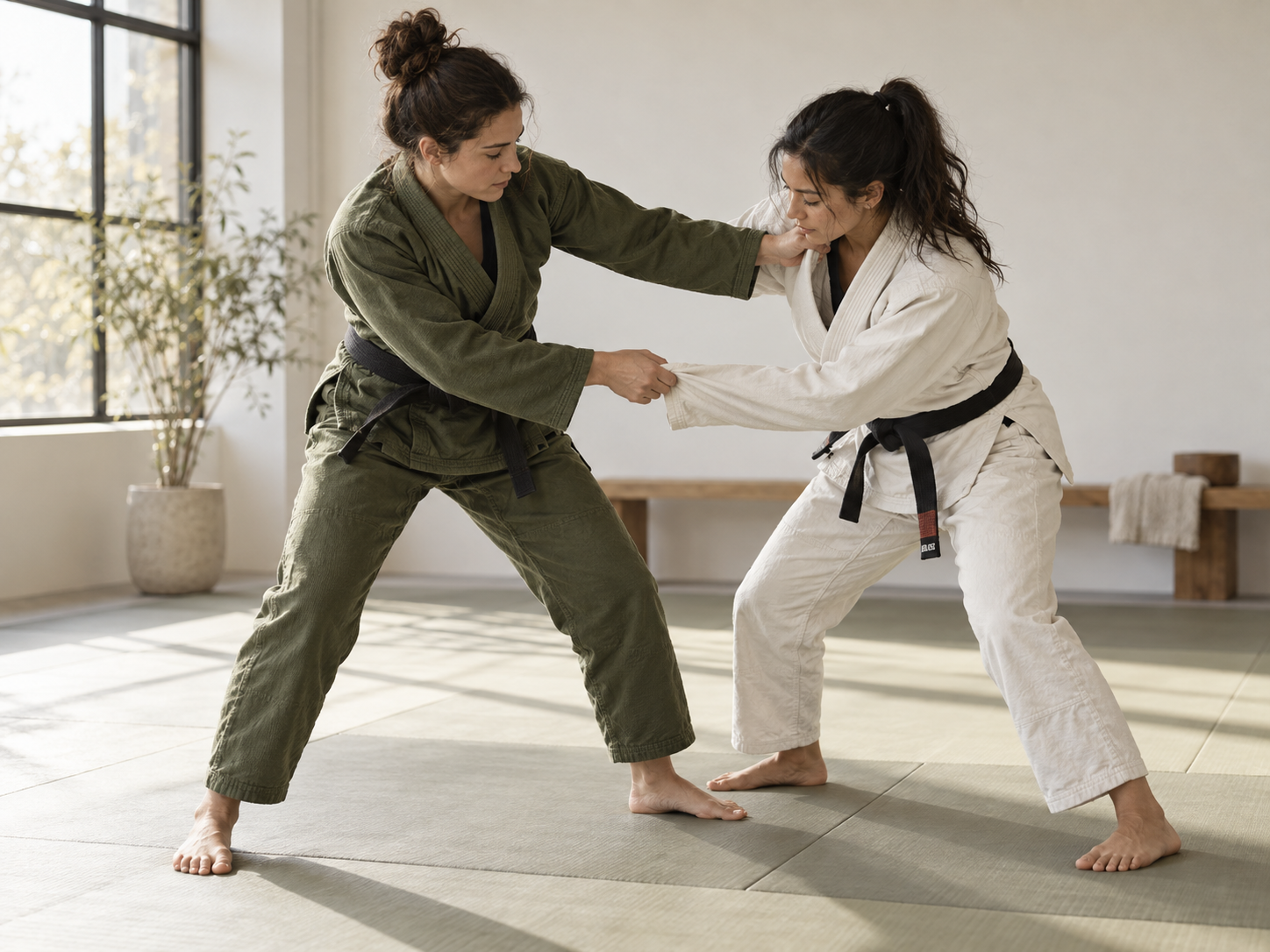
For many women, the first jiu-jitsu class begins with a simple thought: I want to feel safer.
That is a valid reason to step onto the mat. But the benefits can extend far beyond learning how to escape a grip or control someone from the ground. With consistent practice, jiu-jitsu can change how you understand your body, respond to pressure and occupy space.
It is not a guarantee of safety—and no responsible coach should present it as one. What it can offer is preparation: physical skills, greater awareness and the experience of staying engaged when a situation feels uncomfortable.
Confidence built through experience
Confidence in jiu-jitsu is not based on pretending that fear does not exist. It grows through repeated exposure to manageable challenges.
You learn what it feels like to be held, lose balance or find yourself underneath another person. In a controlled environment, you practise breathing, thinking and creating space rather than freezing.
Over time, this can replace “I would not know what to do” with “I have experienced pressure before, and I can still respond.”
Research on empowerment-based self-defence programmes has found improvements in self-defence self-efficacy, assertiveness and knowledge about effective resistance. These programmes are not identical to jiu-jitsu, but their findings help explain why practising realistic responses can be more valuable than simply being told to “be careful.”
Technique creates options—not invincibility
One reason jiu-jitsu can be useful is that it does not rely exclusively on striking or matching another person’s strength. It teaches principles such as protecting vulnerable areas, controlling distance, improving position, escaping grips, using leverage efficiently and getting back to your feet when possible.
These skills can create options during close physical contact, particularly when running away immediately is difficult.
But training should never create a false sense of invincibility. Size, surprise, weapons, multiple attackers and the environment can change any situation. The priority remains awareness, boundaries, de-escalation and escape whenever possible.
Jiu-jitsu is one part of personal safety—not the entire answer.
Awareness begins before physical contact
A good self-defence mindset starts long before a confrontation becomes physical.
Training can make women more attentive to distance, balance, posture and changes in another person’s behaviour. It may also make it easier to recognise discomfort sooner and respond with a clear boundary.
This matters because effective resistance is not limited to fighting. It can include noticing risk, trusting your instincts, using your voice, leaving early, asking for help or creating enough space to escape.
A large randomised trial involving university women found that a structured resistance programme reduced several forms of sexual victimisation. Importantly, the programme combined risk recognition, verbal strategies and physical resistance—it did not rely on fighting techniques alone.
Learning to remain present under pressure
During sparring, a technique that felt simple during practice can suddenly become difficult. Your heart rate rises, someone resists and you have to make decisions quickly.
This is part of what makes jiu-jitsu valuable. You learn to pause, breathe and work through a problem instead of reacting only with panic or force. The goal is not to become fearless. It is to remain capable of making decisions while fear or discomfort is present.
Research examining martial arts and combat sports more broadly suggests potential benefits for wellbeing and psychological health, although the evidence varies and women remain underrepresented in many studies.
The training environment matters
The right academy should make you feel challenged without making you feel unsafe. Look for instructors who respect boundaries, partners who release immediately when someone taps, clear rules around consent and intensity, responsible supervision and a culture where questions are welcomed.
You should never be pressured to spar with someone who makes you uncomfortable. Good training builds confidence through trust, not intimidation.
Strength is also knowing you have choices
Jiu-jitsu cannot prevent every dangerous situation. It cannot remove responsibility from perpetrators, and women should never be blamed for violence committed against them.
What it can do is expand the number of choices available. It can teach you to use your voice, protect your body, think while under pressure and recognise that physical strength is only one part of effective resistance.
Sometimes empowerment is not about feeling powerful every moment. It is about knowing that, even when a situation is difficult, you are not completely without options.
That knowledge can influence far more than what happens on the mat.
References
- Senn CY et al. Efficacy of a Sexual Assault Resistance Program for University Women. New England Journal of Medicine, 2015.
- Hollander JA, Cunningham J. Empowerment Self-Defense Training in a Community Population. Psychology of Women Quarterly, 2020.
- Moore B et al. The Effect of Martial Arts Training on Mental Health Outcomes: A Systematic Review and Meta-analysis, 2020.